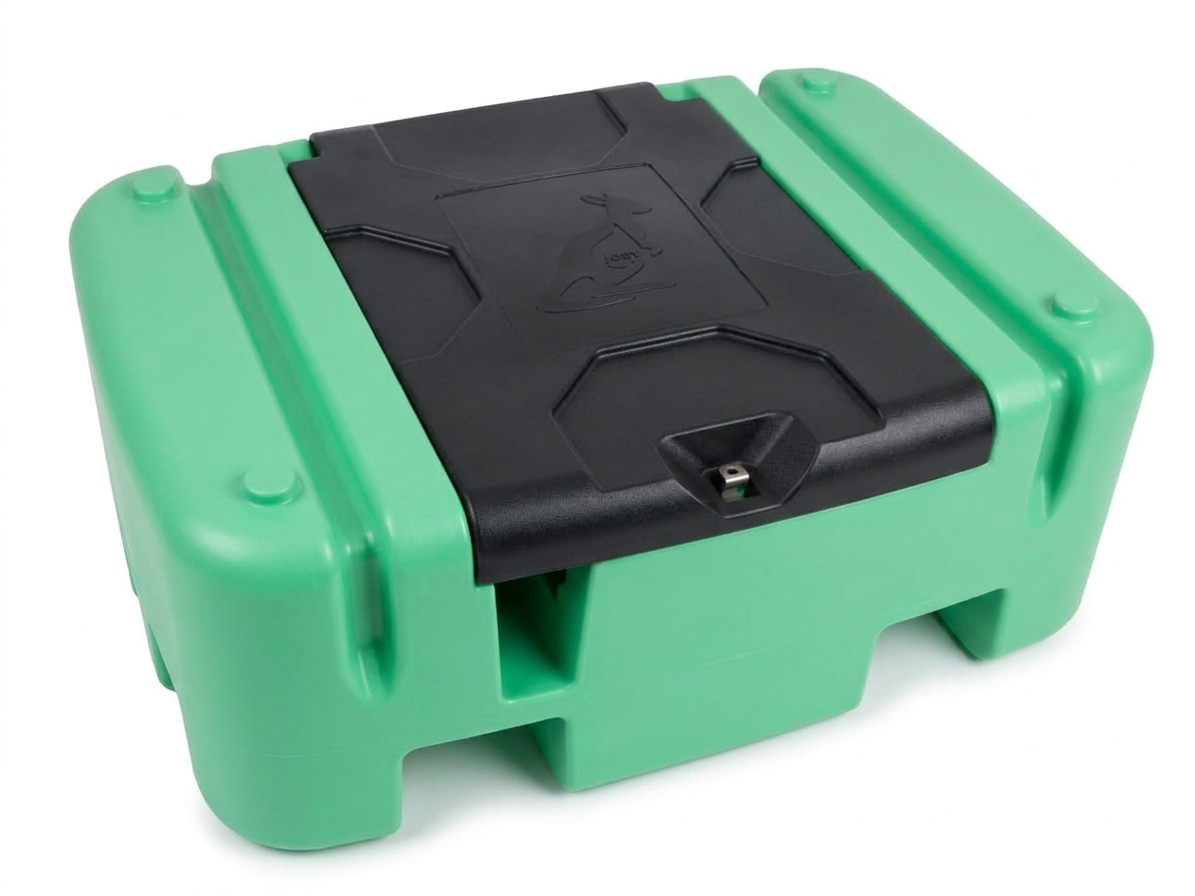
A petrol fuel pod brings a petrol tank, pump, hose and nozzle together in one portable refuelling unit. If you run petrol-powered equipment away from the workshop, it gives you a single place to keep your working fuel supply and dispense it. Joey's range has two sizes: the 210L JP210 and the 330L JP330HR. Both use 57 LPM 12V pumps, but their hose arrangements, dimensions and empty weights differ. Here's how to compare them without assuming that every pod includes the same equipment.
What is a petrol fuel pod?
Petrol pod, unleaded fuel pod and petrol transfer tank are common names for this type of unit. The important detail is the fuel it is intended to carry, not the name on the listing. A portable petrol fuel tank with pump is a dedicated petrol refuelling setup, rather than an extra tank connected to your vehicle's fuel system.
Compared with a collection of jerry cans, the pod gives you a larger single supply and a pump-and-nozzle arrangement. That can suit repeated equipment top-ups; it does not mean the largest size is automatically the best choice. Think about how much petrol you use and where the unit will sit.
What's in the pod: JP210 and JP330HR
Both models include a 57 LPM 12V petrol pump and an automatic shut-off nozzle with digital flow read bowser. Both list a 4 m power cable. The shared pump flow means the buying decision is mainly about reserve capacity, hose reach and the space available, rather than paying for a faster pump.
The JP210 210L petrol fuel pod has a 4 m × 3/4-inch delivery hose with swivel fitting and a pad-lockable lid. Its dimensions are 1100 × 800 × 450 mm, and its listed empty weight is 35 kg.
The JP330HR 330L petrol fuel pod has an integrated 10 m × 3/4-inch hose reel, integrated fuel level gauge, lockable lid and air vent/breather. It measures 1150 × 800 × 690 mm and weighs 80 kg empty. The reel and gauge are listed for this model; do not assume they come with the JP210.
210L vs 330L: capacity, reach and ute fit
Choose the 210L when the smaller reserve and lower empty weight fit your work. Choose the 330L when you need more petrol between refills and want the included hose reel. The JP330HR carries 120L more, but it is also 45 kg heavier before fuel and 240 mm taller. Those differences matter when sharing space with tools or other equipment.
Measure the actual usable ute-tray or trailer space against the dimensions above, including room to open the lid and reach the equipment. Neither size has a universal ute-fit guarantee. Check the vehicle's remaining payload with people, tools and other loads included; the listed weights are empty weights, not the weight of a full pod.
Who buys petrol fuel pods?
Landscaping crews compare pods when several petrol-powered machines need top-ups through the day. Marine users look at the same question for petrol-powered equipment, while motorsport teams compare reserve capacity and hose reach around their working area. Trade fleets may need a dedicated petrol supply alongside diesel vehicles.
Start with the equipment's actual fuel requirements and your normal refuelling routine. A compact pod may be easier to accommodate; a bigger pod with a reel may reduce repositioning. Capacity alone does not tell you which arrangement works best.
Petrol pod vs diesel pod
Keep the fuels separate. Never put petrol through a diesel pod, and do not use these petrol pods for diesel. A shared shape or 12V power supply does not make the units interchangeable. For a mixed fleet, choose a dedicated pod for each fuel rather than trying to use one tank for everything.
Read the diesel vs petrol transfer tanks guide for the existing comparison, then return to the individual product specifications before ordering.
Practical handling between jobs
Keep the pod locked when it is unattended, position it on stable, level ground when refuelling, and keep it away from ignition sources. Keep the hose and nozzle tidy between uses and stay with the transfer rather than leaving equipment filling unattended. Follow the instructions supplied with the unit.
Browse petrol fuel pods, or compare the 210L JP210 and 330L JP330HR side by side. Match capacity, hose arrangement and available space to the work you actually do.
Frequently asked questions
Find your petrol fuel pod
Compare the 210L and 330L petrol pods to match capacity, hose reach and tray space to your equipment.